Modern life rarely slows down. From work pressure and financial concerns to digital overload and relationship challenges, stress has quietly become part of everyday living. You may wake up already tired, feel distracted throughout the day, or struggle to fall asleep at night because your mind won’t stop racing.
Many people try to cope using temporary distractions—scrolling, binge-watching, or overthinking solutions—but these often make things worse over time.
This is where Mindful Meditation for Stress Relief becomes a powerful and practical solution.
Unlike complex wellness routines, meditation doesn’t require expensive tools or hours of free time. It is simple, adaptable, and scientifically proven to help regulate stress. In this detailed beginner meditation guide, you’ll learn how to use mindfulness to calm your mind, improve emotional balance, and build a sustainable daily mindfulness practice.
What is Mindful Meditation?
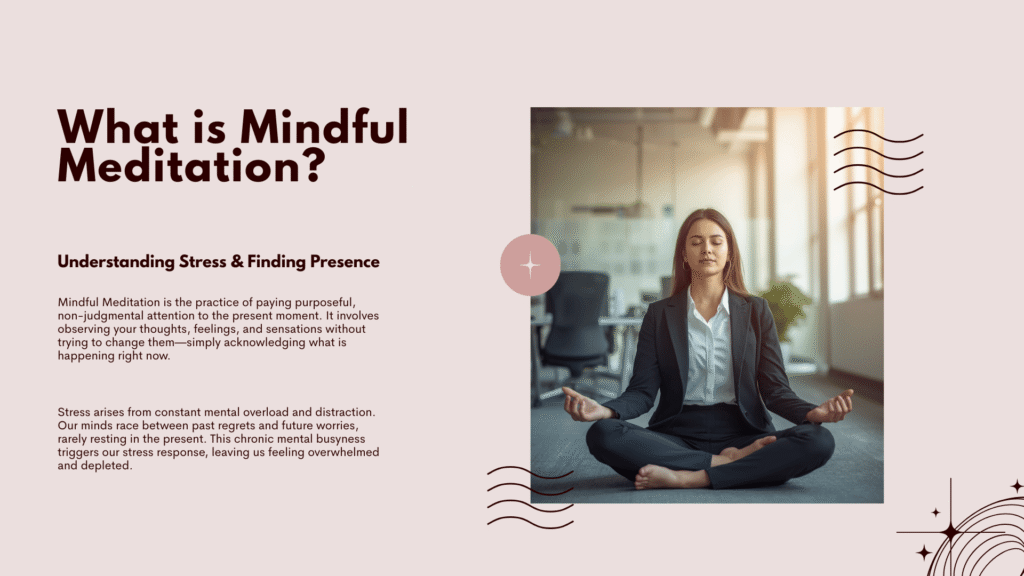
Mindful Meditation for Stress Relief is the practice of intentionally focusing your attention on the present moment while calmly observing your thoughts, feelings, and bodily sensations without judgment.
Rather than trying to “empty your mind,” mindfulness teaches you to:
- Notice thoughts without reacting
- Observe emotions without suppression
- Stay grounded in the present moment
A Simple Definition:
Mindful meditation is awareness with acceptance.
This approach is one of the most effective stress management techniques because it shifts your relationship with stress instead of trying to eliminate it entirely.
Why Stress Happens in the First Place
To understand why Mindful Meditation for Stress Relief works, it helps to understand stress itself.
Stress is your body’s natural response to perceived danger. When triggered:
- Your heart rate increases
- Your breathing becomes shallow
- Stress hormones like cortisol rise
This “fight-or-flight” response is useful in real danger—but harmful when activated constantly due to daily pressures.
Over time, chronic stress can affect:
- Sleep quality
- Mental clarity
- Emotional stability
- Physical health
This is why learning how to meditate for stress is not just helpful—it’s essential.
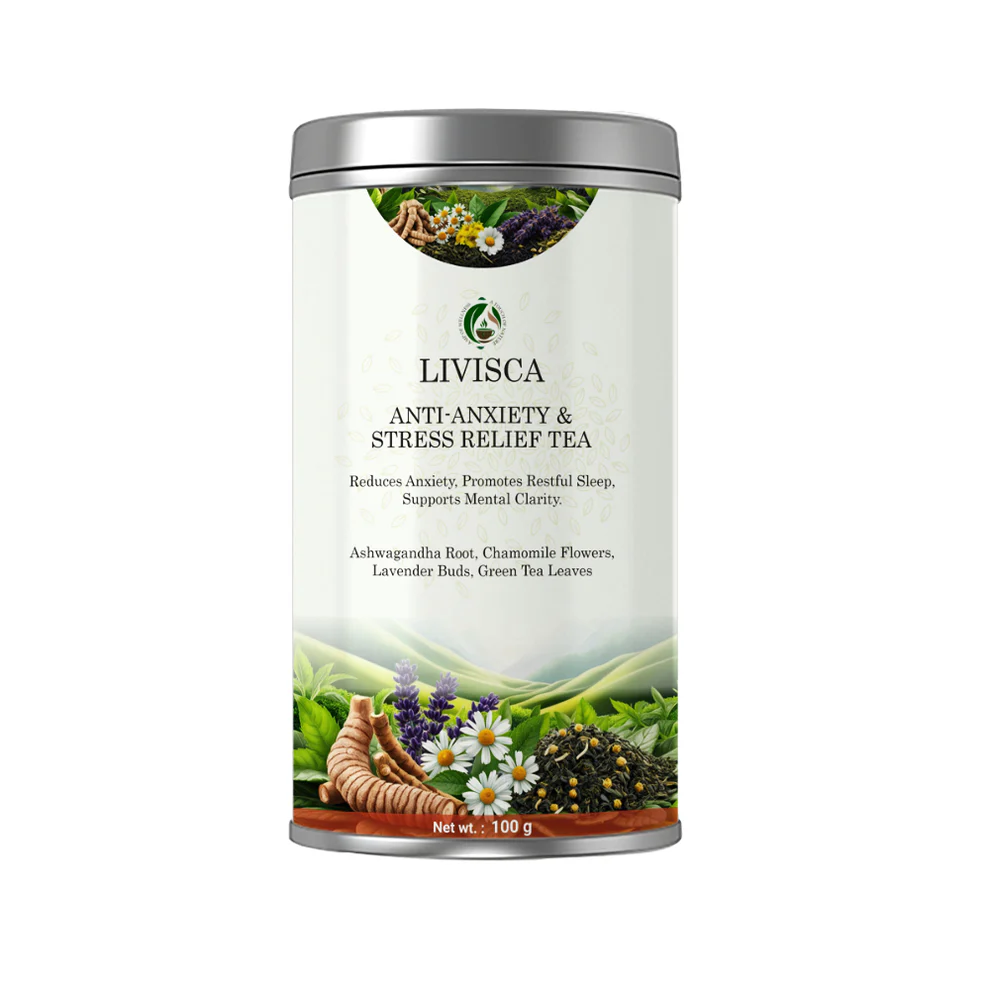
Anti-Anxiety & Stress Relief Tea
Benefits of Mindful Meditation for Stress Relief
Practicing Mindful Meditation for Stress Relief regularly creates both immediate and long-term changes in your mental and physical well-being.
Key mindfulness meditation benefits:
1. Reduces Stress Hormones
Meditation lowers cortisol levels, helping your body return to a relaxed state.
2. Improves Emotional Regulation
You respond thoughtfully instead of reacting impulsively.
3. Enhances Focus and Productivity
Regular practice supports focus and clarity meditation, improving attention span.
4. Supports Better Sleep
A calm mind leads to deeper and more restorative sleep.
5. Helps with Anxiety
Highly effective for meditation for anxiety and stress, reducing racing thoughts.
6. Builds Mental Resilience
Over time, you become less affected by external stressors.
7. Helps You Reduce Stress Naturally
No medication or external dependency required.
The Science Behind Meditation
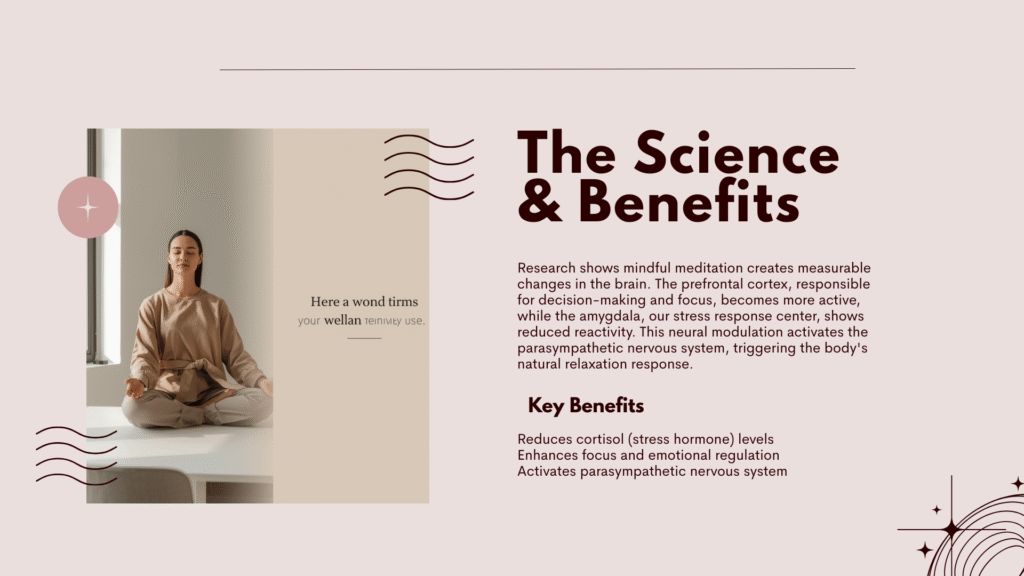
Research in neuroscience and psychology strongly supports mental health and meditation practices.
What Happens in Your Brain:
- Amygdala (stress center): Activity decreases
- Prefrontal cortex (decision-making): Strengthens
- Hippocampus (memory & learning): Improves
Nervous System Impact:
Meditation activates the parasympathetic nervous system, which:
- Slows heart rate
- Deepens breathing
- Promotes relaxation
This is why breathing exercises for stress are a core part of meditation—they directly signal safety to your body.
Step-by-Step Beginner Guide: How to Meditate for Stress
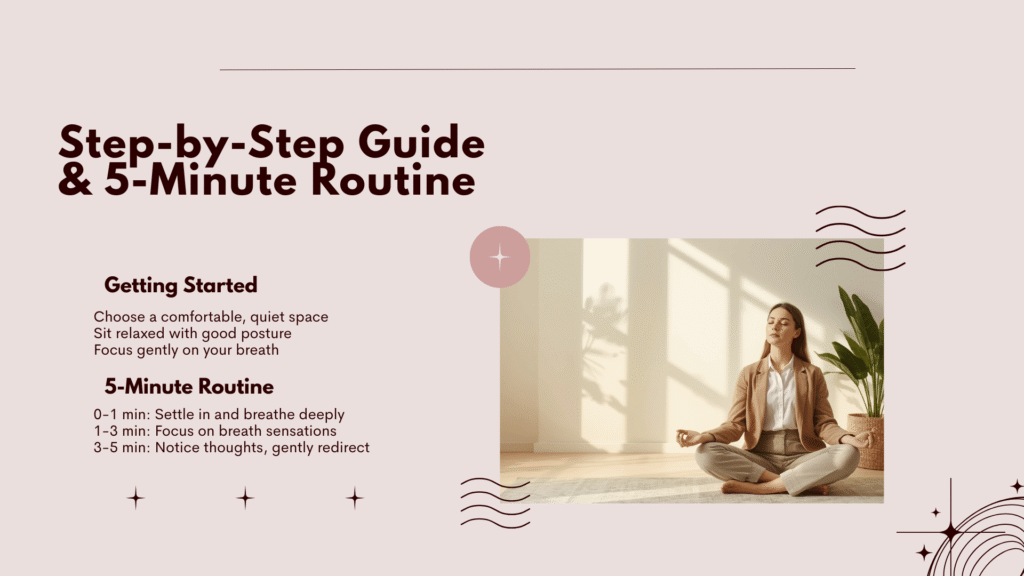
If you’re new and wondering how to meditate for stress, follow this structured approach.
Step 1: Choose a Comfortable Space
You don’t need perfect silence. A quiet corner or even your bed works.
Step 2: Sit in a Relaxed Position
- Keep your back straight
- Rest your hands comfortably
- Close your eyes or soften your gaze
Step 3: Focus on Your Breath
Practice simple breathing exercises for stress:
- Inhale slowly for 4 seconds
- Hold for 2 seconds
- Exhale gently for 6 seconds
Repeat this cycle.
Step 4: Observe Without Judgment
Thoughts will arise. Instead of resisting them:
- Notice them
- Let them pass
- Return to your breath
Step 5: Start Small
Begin with 5 minutes daily.
Step 6: Gradually Increase Duration
Move to 10–15 minutes as it becomes easier.
Step 7: Stay Consistent
Consistency is the foundation of any daily mindfulness practice.
5-Minute Quick Meditation Routine for Busy People
If time is limited, this quick routine still delivers results.
Minute-by-Minute Breakdown:
Minute 1: Deep breathing
Minute 2: Focus on breath rhythm
Minute 3: Observe thoughts
Minute 4: Relax body tension
Minute 5: Sit in still awareness
This is a practical tool for meditation for anxiety and stress during hectic days.
Common Mistakes Beginners Should Avoid
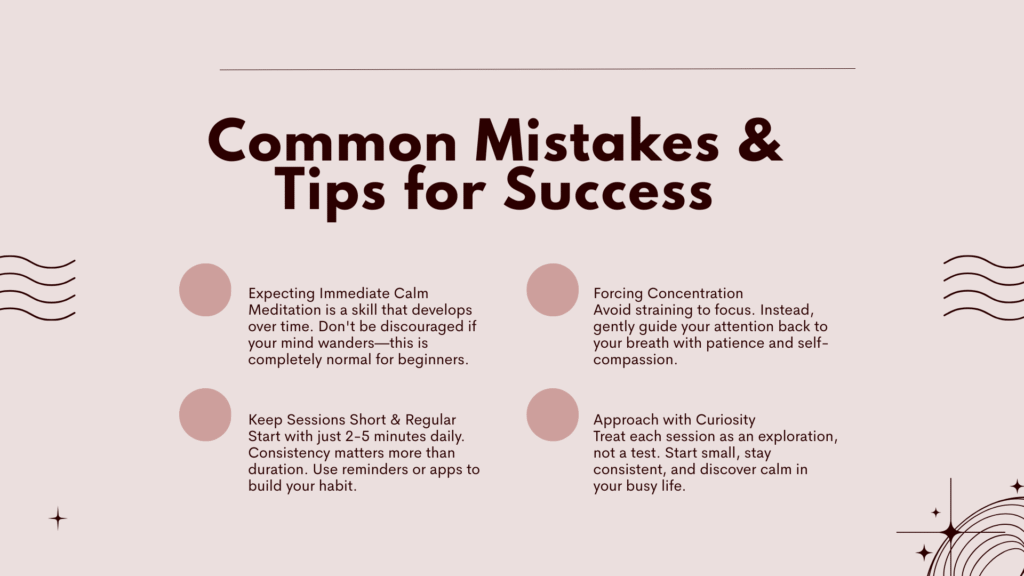
When starting Mindful Meditation for Stress Relief, many people quit too early due to misconceptions.
Avoid These:
- Expecting instant calm
- Trying to stop thoughts completely
- Meditating only when stressed
- Sitting in discomfort
- Being self-critical
Meditation is not about perfection—it’s about awareness.
Tips for Building a Daily Mindfulness Practice
A sustainable daily mindfulness practice is simple when approached correctly.
Practical Tips:
- Meditate at the same time daily
- Start with guided meditation for beginners
- Use reminders or habit stacking
- Keep sessions short initially
- Track progress in a journal
Pro Tips (Expert-Level Guidance)
Based on real-world experience teaching Mindful Meditation for Stress Relief, here are deeper insights:
1. Use “Micro-Meditations”
Pause for 1 minute during the day to reset.
2. Anchor to Your Breath
Your breath is always available as a grounding tool.
3. Combine Calm Mind Techniques
Pair meditation with stretching or mindful walking.
4. Accept Mental Noise
A busy mind doesn’t mean failure—it means awareness.
5. Practice During Stressful Moments
Don’t wait for calm environments.
Beginner Meditation Checklist
Before each session:
- Quiet or comfortable space
- Relaxed posture
- Timer set (5–10 minutes)
- No expectations
- Open mindset
Short Guided Meditation Script
Use this simple guided meditation for beginners:
Close your eyes.
Take a slow, deep breath in… and gently exhale.
Bring your attention to your breath.
Feel the air entering and leaving your body.
If your mind wanders, notice it without judgment.
Gently bring your focus back.
Relax your shoulders.
Relax your jaw.
Relax your entire body.
You are present.
You are calm.
Stay here for a few moments.
When ready, slowly open your eyes.
Additional Relaxation Techniques for Stress Relief
Meditation works even better when combined with other relaxation techniques.
Try These:
- Progressive muscle relaxation
- Body scan meditation
- Journaling
- Light yoga
- Nature walks
These methods enhance your ability to reduce stress naturally.
How to Use Meditation for Focus and Clarity
Practicing focus and clarity meditation improves mental sharpness.
Technique:
- Choose a single point of focus (breath or sound)
- Return to it whenever distracted
- Practice daily
This strengthens attention control and reduces mental clutter.
Real-Life Example: Meditation in Daily Life
Imagine this:
You’re stuck in traffic, already late, and feeling frustrated.
Instead of reacting:
- You take slow breaths
- Observe your thoughts
- Relax your body
Within minutes, your stress reduces.
This is how Mindful Meditation for Stress Relief works in real situations.
FAQs (Voice Search Optimized)
1. What is the easiest meditation for beginners?
The easiest method is Mindful Meditation for Stress Relief, focusing on breathing and awareness.
2. How often should I meditate for stress relief?
Practice daily, even if only for 5 minutes.
3. Can meditation replace stress medication?
Meditation supports mental health and meditation, but consult a professional for medical advice.
4. Is guided meditation helpful for beginners?
Yes, guided meditation for beginners provides structure and clarity.
5. How quickly does meditation reduce stress?
You may feel calmer immediately, but lasting results come with consistency.
Start Today: Simple Action Plan
Starting is easier than you think.
Day 1 Plan:
- Sit quietly for 5 minutes
- Practice breathing
- Follow the guided script
Week 1 Goal:
- Build consistency
- Focus on showing up daily
Month 1 Result:
- Notice reduced stress
- Improved focus
- Better emotional balance
Conclusion: Build Calm, One Breath at a Time
Stress may always be part of life—but how you respond to it can completely change.
With consistent practice, Mindful Meditation for Stress Relief becomes more than a technique. It becomes a way of living—with greater awareness, calm, and control.
Start small. Stay consistent. Trust the process.