
We’ve all been there—staring at our textbooks, feeling drained, stressed, or totally zoned out after back-to-back online lectures. A Yoga Routine for Students at Home isn’t about turning into a gym rat; it’s about giving our bodies and brains a little reset between chaos. Even a short morning stretch can shift our energy, calm the mind, and make that first cup of coffee feel less necessary. When we practice consistently, we notice small changes: our posture feels better, we’re less jittery before exams, and late-night study sessions feel slightly easier. It’s not about achieving perfect poses but building something we can return to, even on lazy days. For students juggling assignments, deadlines, and social life, a practical routine is a tiny anchor—a space that’s ours to breathe, move, and focus. Over time, the habit helps us handle distractions and low-energy mornings without panicking, and the mental clarity that comes from this routine often surprises us more than the physical changes.
How Yoga Improves Concentration and Memory in Students
When we try to cram facts or revise formulas, our minds can feel like a tangled mess. That’s where yoga for concentration and memory quietly steps in. Poses that encourage balance and breath awareness actually train us to stay present, which matters more than we realize when revising. Even 10–15 minutes of a morning yoga routine for students helps regulate stress hormones that usually make us forgetful or anxious during exams. We’ve noticed that simple mindfulness movements and slow, deliberate stretches make study sessions feel more productive without forcing a rigid schedule. Beginners often rush through poses thinking it’s “just stretching,” but when we slow down and notice our breath, our brain engages differently. Regular practice helps memory retrieval and attention span, not overnight but gradually, and the best part is we don’t need fancy equipment—just space, a mat, and a few minutes to reconnect.
Scientific Benefits of Yoga for Brain Function and Study Performance
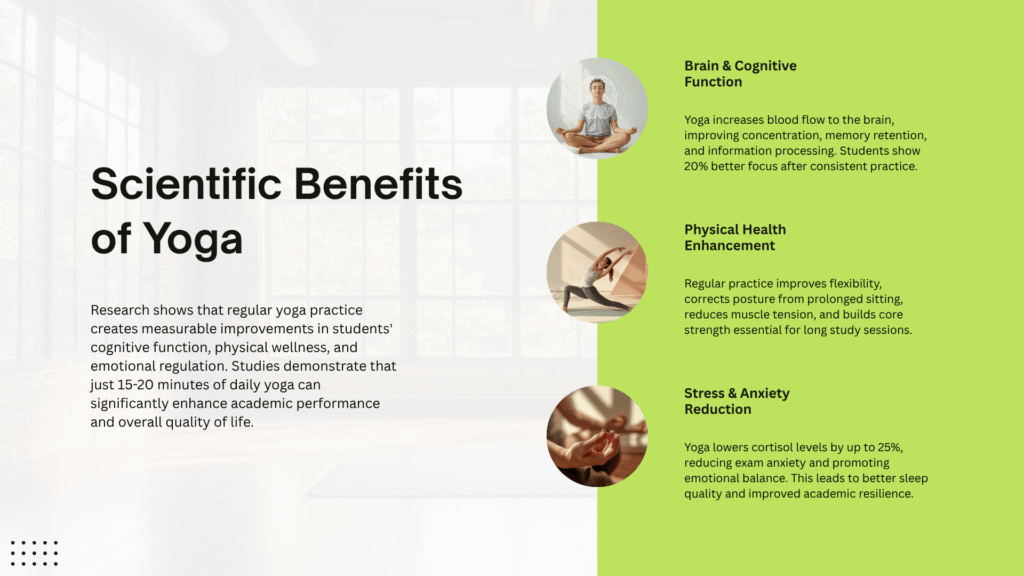
Research backs what we’ve felt anecdotally: yoga impacts brain function in subtle but powerful ways. By combining movement, balance, and controlled breathing, our neurons get more oxygen, which improves alertness and cognitive processing. Even a short easy yoga at home for beginners routine can reduce the mental fog we get after long study sessions. Certain poses stimulate the frontal lobe, boosting focus, while slow, mindful breathing helps calm the amygdala—the part of the brain that freaks out during exam stress. We’ve noticed students who stick to a simple routine report fewer headaches, better retention, and an easier time switching between subjects. It’s not magic, but consistent practice creates a rhythm that the brain starts to anticipate, making concentration feel less forced and more natural, even when deadlines pile up.
Top Benefits of Following a Daily Yoga Routine for Students at Home
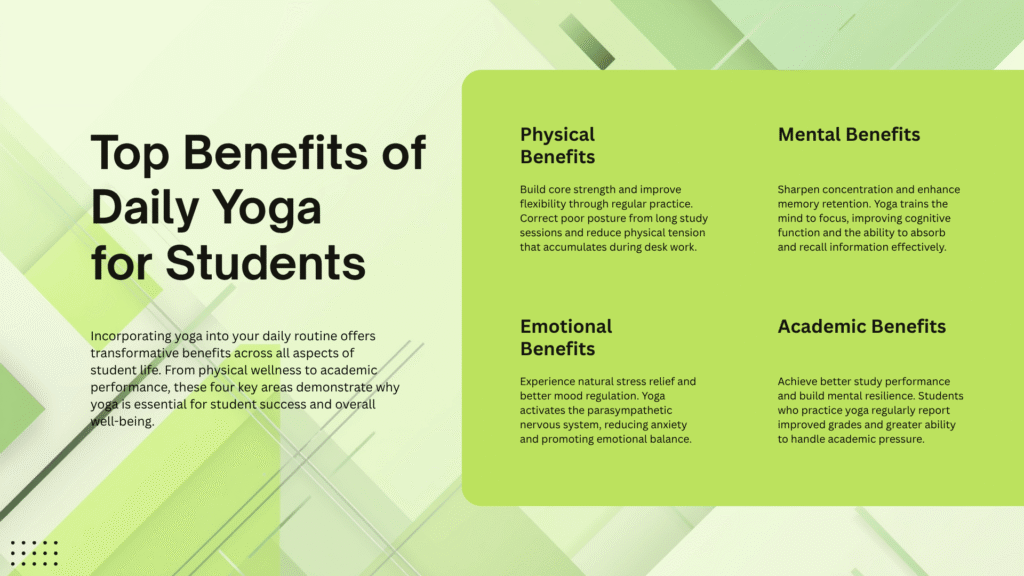
Following a Yoga Routine for Students at Home daily isn’t about instant transformation—it’s about stacking small wins that add up. We feel less sluggish, our backs stop complaining after long study sessions, and even mental fatigue hits differently. Regular practice teaches us to handle stress without spiraling, which is huge during exam weeks. Energy dips become noticeable, but a few minutes of stretching or morning yoga routine for students revives us. Over time, concentration improves, memory retrieval becomes smoother, and we start approaching study time with slightly more patience. It’s also a subtle mood booster—no motivational quotes needed, just a few deliberate movements and mindful breaths. The routine gives structure on chaotic days and becomes surprisingly comforting. Students who tried skipping it often find they lose that mental clarity and bounce back slower, proving the routine is more about consistency than intensity.
Physical, Mental, and Emotional Advantages of Yoga Practice
We sometimes forget yoga isn’t just physical—it works on multiple layers. Physically, a daily easy yoga at home for beginners routine reduces stiffness from hours of sitting, and improves posture for long reading sessions. Mentally, the combination of movement and breath enhances Yoga Routine for Students at Home, making studying feel less like a mental tug-of-war. Emotionally, taking time for ourselves—even just 15 minutes—reduces irritability and exam anxiety. Some days we only manage a few poses, and that’s okay; even incomplete sessions can lift mood. Over time, we notice a calmer response to stressors, fewer tension headaches, and a subtle sense of balance that doesn’t appear overnight but builds quietly. Yoga becomes a companion in student life, not a chore, reminding us that taking small, consistent steps can make the hardest days feel manageable.
Step-by-Step Morning Yoga Routine for Students at Home (Beginner-Friendly Guide)
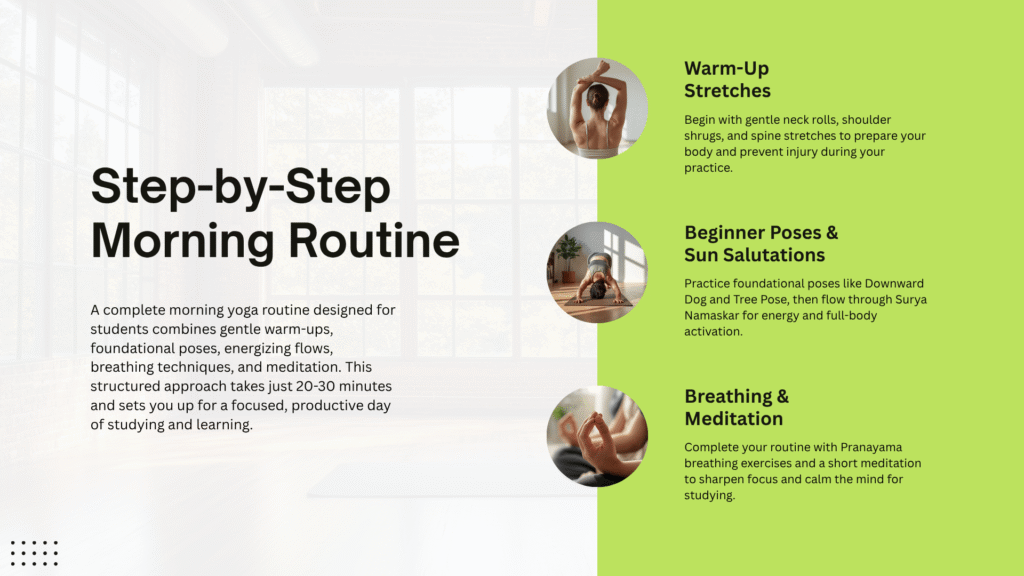
Starting our day with a morning yoga routine for students doesn’t have to be complicated or long. We keep it simple: wake up, drink a bit of water, roll out a mat, and start moving. Even beginners find that a few stretches, gentle twists, and sun salutations energize both body and mind, making the morning less rushed. We often combine short easy yoga at home for beginners poses with a few deep breaths to set the tone for focus. The key is consistency—some days, we do the full routine; other days, just a couple of minutes to keep the habit alive. Over time, this small ritual improves posture, reduces tension, and subtly improves attention during morning classes or online lectures. It’s not about perfect alignment but building a sustainable flow that becomes part of our daily rhythm. The routine becomes a gentle bridge between sleep and study, helping us start with intention rather than stress.
Warm-Up Exercises for an Effective Yoga Routine at Home
Warming up is often overlooked, but we’ve learned it makes the Yoga Routine for Students at Home far more effective. Even a few minutes of joint rotations, gentle neck stretches, or wrist loosening prepares the body and mind for focused movement. When we skip this step, poses feel stiff, and our focus drifts faster. Beginners often rush in thinking flexibility will appear magically, but warming up gradually reduces the risk of strain and increases body awareness. We like to add slow side stretches or gentle torso twists—simple, forgiving movements that awaken muscles and help us feel grounded. Over time, this small ritual signals the brain that it’s time to focus, creating a smoother transition into the main routine. The routine is forgiving, adaptable, and can fit into the tightest mornings.
Simple Stretching to Prepare the Body for Yoga
Even 5–6 minutes of stretching before a morning yoga routine for students can transform how we feel on the mat. We often start with hamstring stretches, shoulder rolls, and gentle backbends to release tension from long nights of studying. Beginners usually underestimate how much small stretches improve posture and prevent discomfort. Yoga Routine for Students at Home The key is slow, intentional movement; forcing flexibility rarely works and just leaves us frustrated. Stretching also helps us mentally shift from groggy mornings or post-study fatigue to a more alert state. Over time, these mini stretches become cues for the brain to enter focus mode. It’s simple, low-pressure, and surprisingly satisfying when we notice less stiffness, more energy, and a calmer mind even before starting the main poses.